January and July
26 paychecks in 2026, with three Friday paydays in those two months.
Free biweekly payday calculator, no signup
Enter any regular biweekly payday to map every pay date from 2026 to 2032. You will see the exact three-paycheck months and whether your calendar has 26 or the less common 27 paychecks.
Free biweekly pay calendar
Use an official payday from your employer, not an early bank deposit. The calculator moves in exact 14-day intervals to map the selected year.
Try either example to see the difference between 26 and 27 paychecks.
There is no universal three-paycheck calendar
Your employer's actual biweekly sequence determines the result.
26 paychecks in 2026, with three Friday paydays in those two months.
The same year, but a different biweekly sequence produces different months.
This alignment produces 27 paychecks and three three-paycheck months.
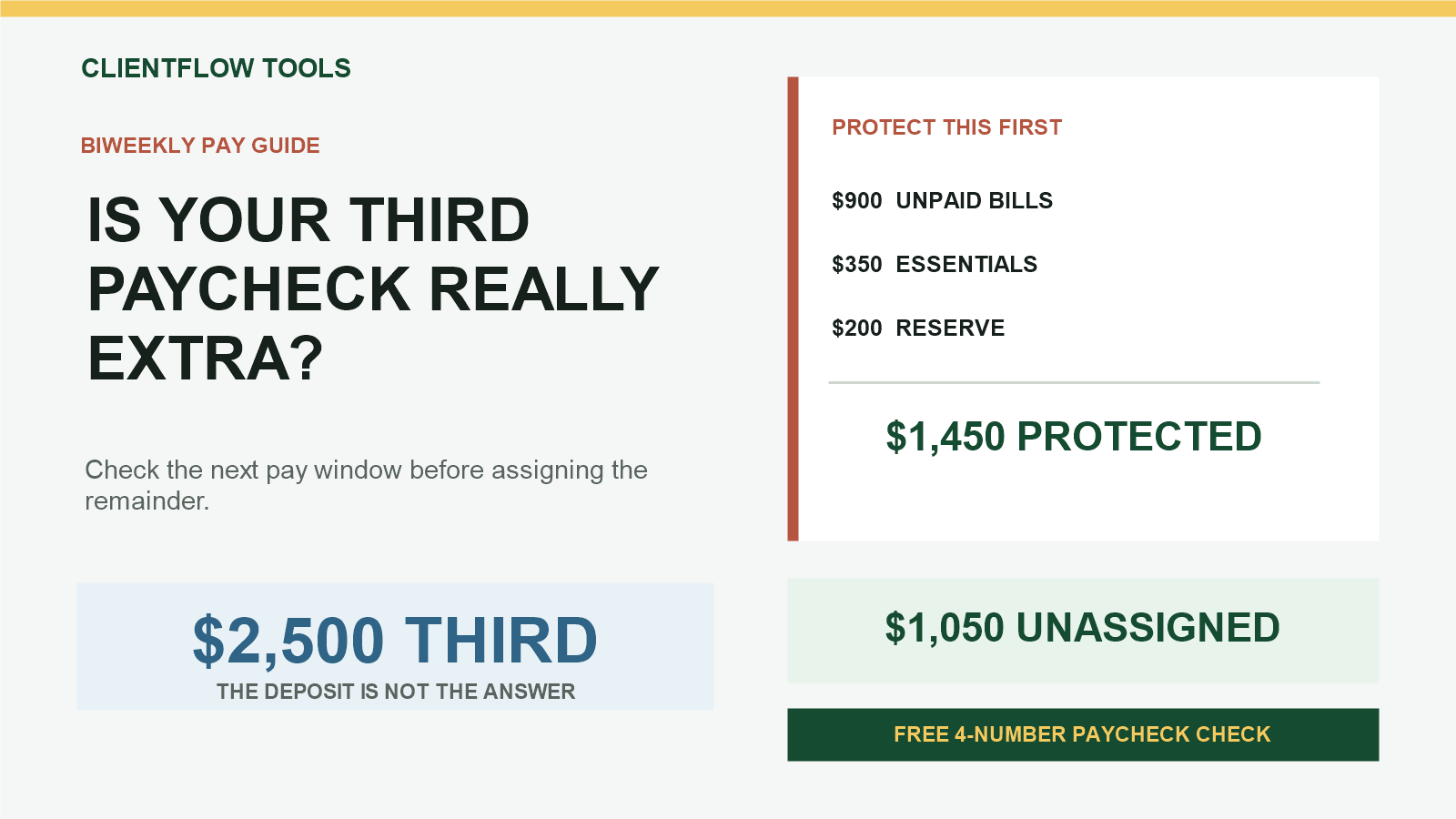
A date is not a spending decision
Start with unpaid bills, essentials, and the reserve you need before the following payday. The amount left after those commitments is the part you can deliberately assign to savings, debt, or another goal.
Check which paycheck should fund one upcoming billUse the calendar without guessing
Do not assume the net amount will match a normal paycheck. Benefits, retirement contributions, taxes, garnishments, and other payroll rules can differ.
Turn the calendar into a plan
The free worksheet covers two upcoming checks with automatic totals. The $7 planner adds automatic due-date sorting, paid status, local saving, backup, and six printable pages.
The months depend on your exact biweekly sequence. Enter one official payday to calculate yours.
Every-14-day pay usually creates 26 checks per year. Those checks do not divide evenly across 12 calendar months, so two months usually receive a third check.
Yes. Some calendar alignments place 27 scheduled paydays inside one year and create three three-paycheck months.
No. Biweekly pay follows a 14-day interval and usually has 26 checks. Twice-monthly pay has 24 checks on fixed dates.
It can change when money appears. Use an employer-scheduled payday as the anchor and confirm unusual dates with payroll.
No. The date stays in the current browser tab and is not included in anonymous usage measurement.