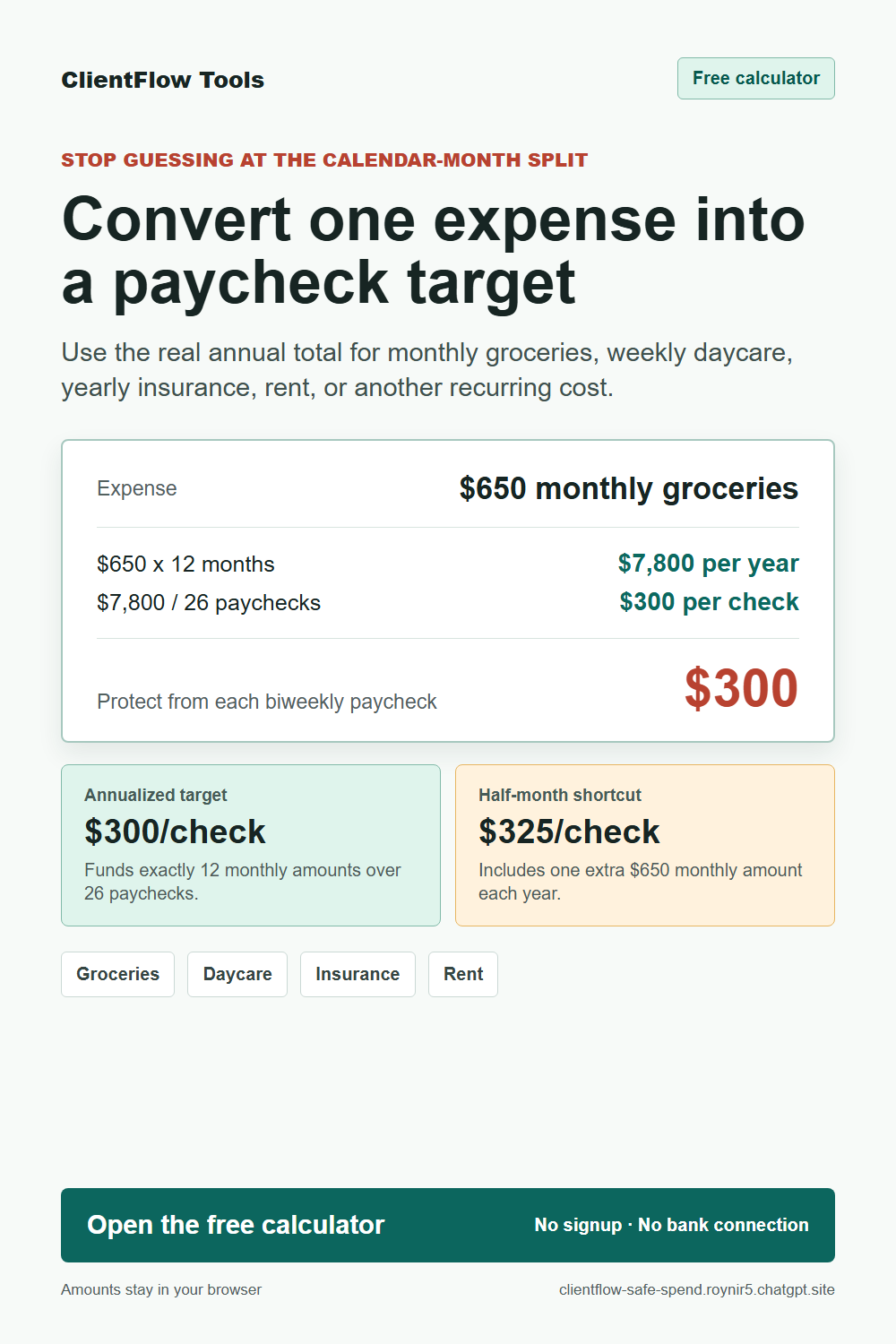
$300 from each check
$650 x 12 months = $7,800. Divide by 26 biweekly paychecks.
Free monthly-bills calculator, no signup
Enter one monthly bill or recurring expense and see the exact amount to protect from each of 26 biweekly paychecks. You can also choose weekly, twice-monthly, or monthly pay and change how often the expense occurs.
Free recurring-expense calculator
The calculator converts the expense to a yearly total, then divides it by the standard number of paychecks on your selected schedule.
Try the example to see how a monthly amount changes on biweekly pay.
One monthly number, two different methods
Choose the result that matches whether you want an exact annual target or an extra-month buffer.
Turn the paycheck target into one grocery trip plan$650 x 12 months = $7,800. Divide by 26 biweekly paychecks.
$325 x 26 = $8,450, which includes one extra $650 monthly amount.
The calendar month can end mid-paycheck
A paycheck can cover the end of one month and the start of another. The recurring target still follows the pay cycle. Purchases can still be recorded in the calendar month when they happen.
Need to fund the next rent deadline instead?Worked examples
Rounding up to cents prevents the yearly set-aside from finishing short. Recalculate when the expense or pay frequency changes.
After you have the recurring target
The free worksheet shows protected totals and money left for two checks. The $7 planner adds automatic due-date sorting, paid status, local saving, backup, and six printable pages.
Multiply the monthly amount by 12, then divide by 26 standard biweekly paychecks.
Half from each of 26 checks funds 13 monthly amounts. That can be a useful buffer, but it is different from spreading 12 months across 26 checks.
Use the paycheck amount for that whole pay cycle. Record each purchase in the calendar month when it occurs if you also review monthly spending.
Yes. Choose the expense frequency, enter its amount, and select the pay schedule that funds it.
No. The amount stays in the current browser tab and is not included in anonymous usage measurement.