Free and private
Free Paycheck Budget Calculator
Find your safe-to-spend number before payday after bills, essentials, and a reserve. No signup, bank connection, or spreadsheet.
What the calculator does
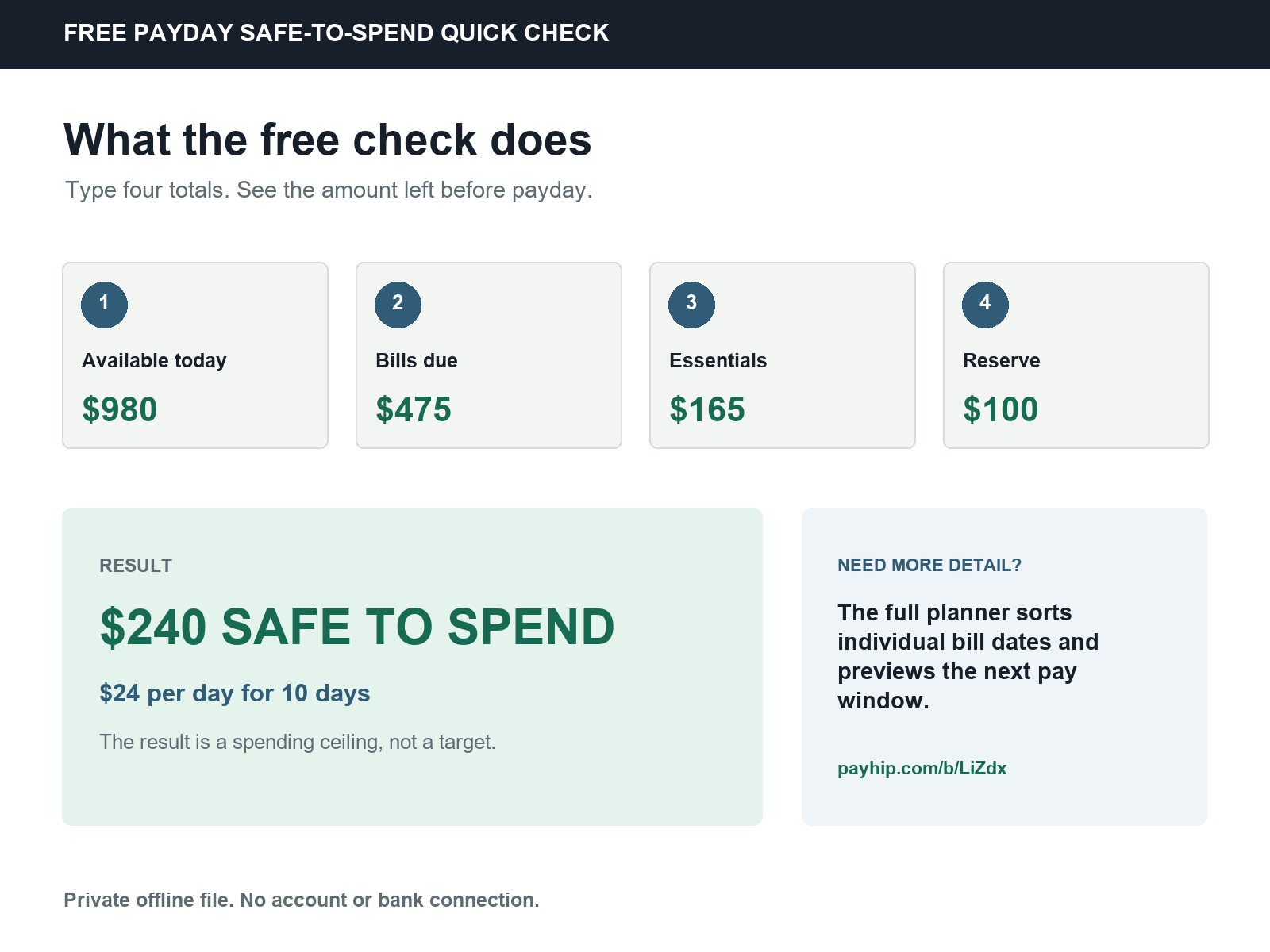
A finished $980 example
It protects $475 for bills, $165 for essentials, and a $100 reserve. The $240 left is the safe-to-spend estimate before payday.
Enter four numbers
Your result
--Complete the four fields to see your estimate. Enter 0 when a field does not apply.
The calculation
One number your bank balance does not show
The calculator subtracts money already needed before payday. Bills due after payday stay out of this estimate because they belong to the next pay window.
Need more than one quick number?
Choose the free view that matches your next money decision
Keep a private copy
Download the offline version free
The free ZIP includes the same quick calculator, a one-page printable, and a short start guide. It works without an internet connection after download.
Get the free offline versionWhen four totals are not enough
Sort each bill into the right paycheck
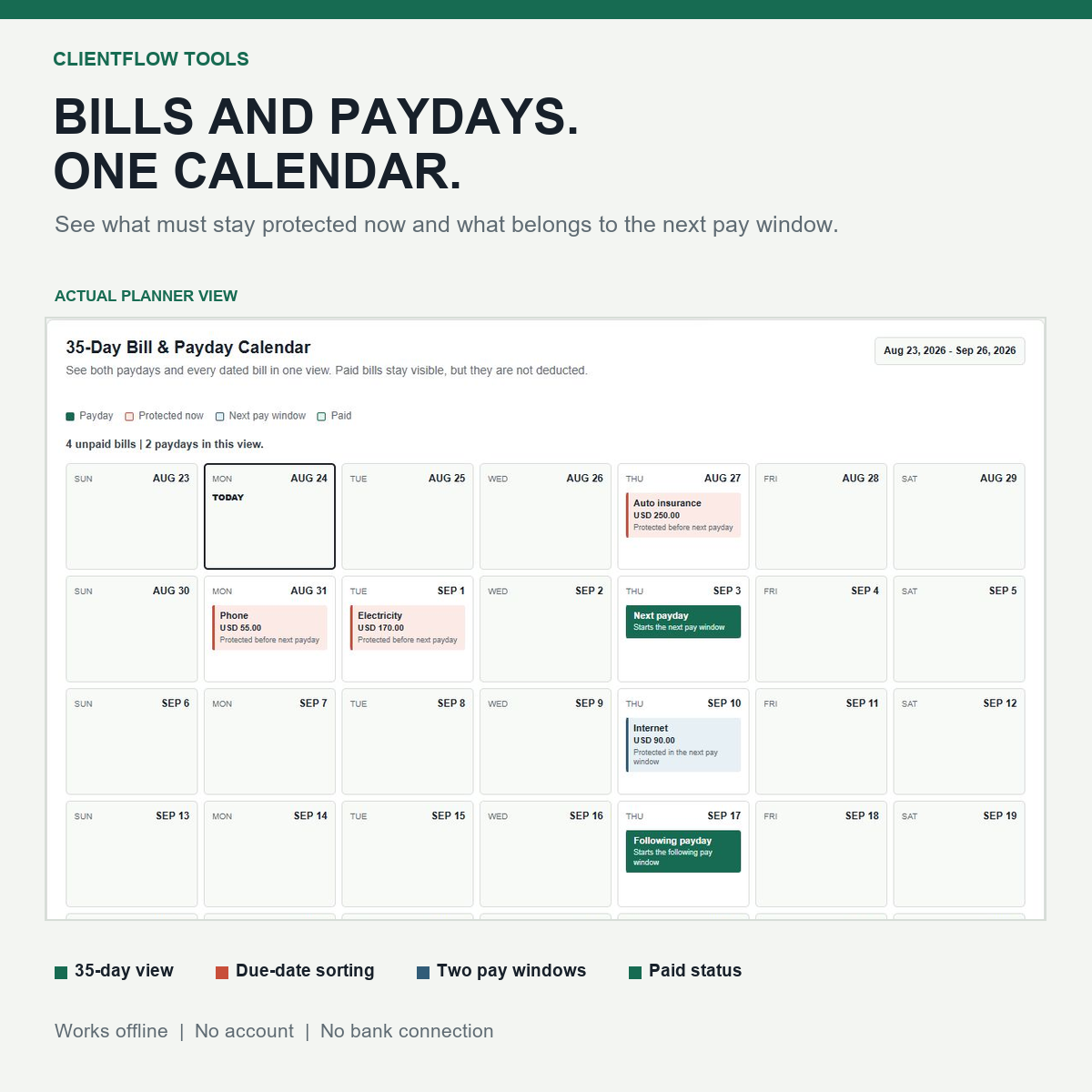
The full planner adds bill names, due dates, paid status, automatic current-versus-next-window sorting, a 35-day bill calendar, local saving, backup, and six printable pages. Use WELCOME10 for 10% off.
Common questions
Does this connect to my bank?
No. You type the four totals yourself, and the amounts and result stay in your browser. Anonymous page and interaction counts never include those values.
Which bills should I count?
Count unpaid bills due on or before the next payday. Keep later bills for the next pay window.
Which balance should I use when transactions are pending?
Start with money you can actually use. If a pending debit already reduced that balance, do not subtract it again. Include a scheduled payment due before payday only when it has not reduced the starting balance. Bank labels and processing rules vary, so verify them before calculating. See the current-versus-available balance examples.
Is the result a spending guarantee?
No. It is an estimate based on the amounts entered. Check pending transactions, due dates, and essential costs before spending.