Free two-paycheck bill sorter, no signup
Which Paycheck Should Pay Each Bill?
Enter your next three paydays and up to six bills. Get a clear list for Paycheck 1, a clear list for Paycheck 2, each bill total, and the amount left after those listed bills.
One current plan, up to six bills
Give every bill a paycheck
Use confirmed deposit dates and take-home amounts. The result shows money left after the bills listed here, not a complete safe-to-spend number.
Enter the next three paydays, two paycheck amounts, and at least one bill.
Worked example
Two $1,650 paychecks, six bills
Rent, the car payment, and internet land in the first pay window. Utilities, phone, and insurance land in the second.
The date rule
Fund the bill before it is due
A bill goes to the last paycheck that arrives before the due date. If the bill is due on payday, the calculator uses the earlier paycheck because a same-day deposit and automatic draft may not post in the order you expect.
The Consumer Financial Protection Bureau recommends putting both bill due dates and income dates on a bill calendar so timing gaps are visible. Open the CFPB bill calendar
- 1Enter real deposit dates. Do not assume every month has the same calendar pattern.
- 2Add each amount and due date. Use a reasonable estimate for a variable utility bill.
- 3Review each paycheck total. A negative result means the listed bills alone exceed that check.
- 4Check the rest of the plan. Food, transport, pending charges, savings, and a reserve still matter.
From one free result to a reusable plan
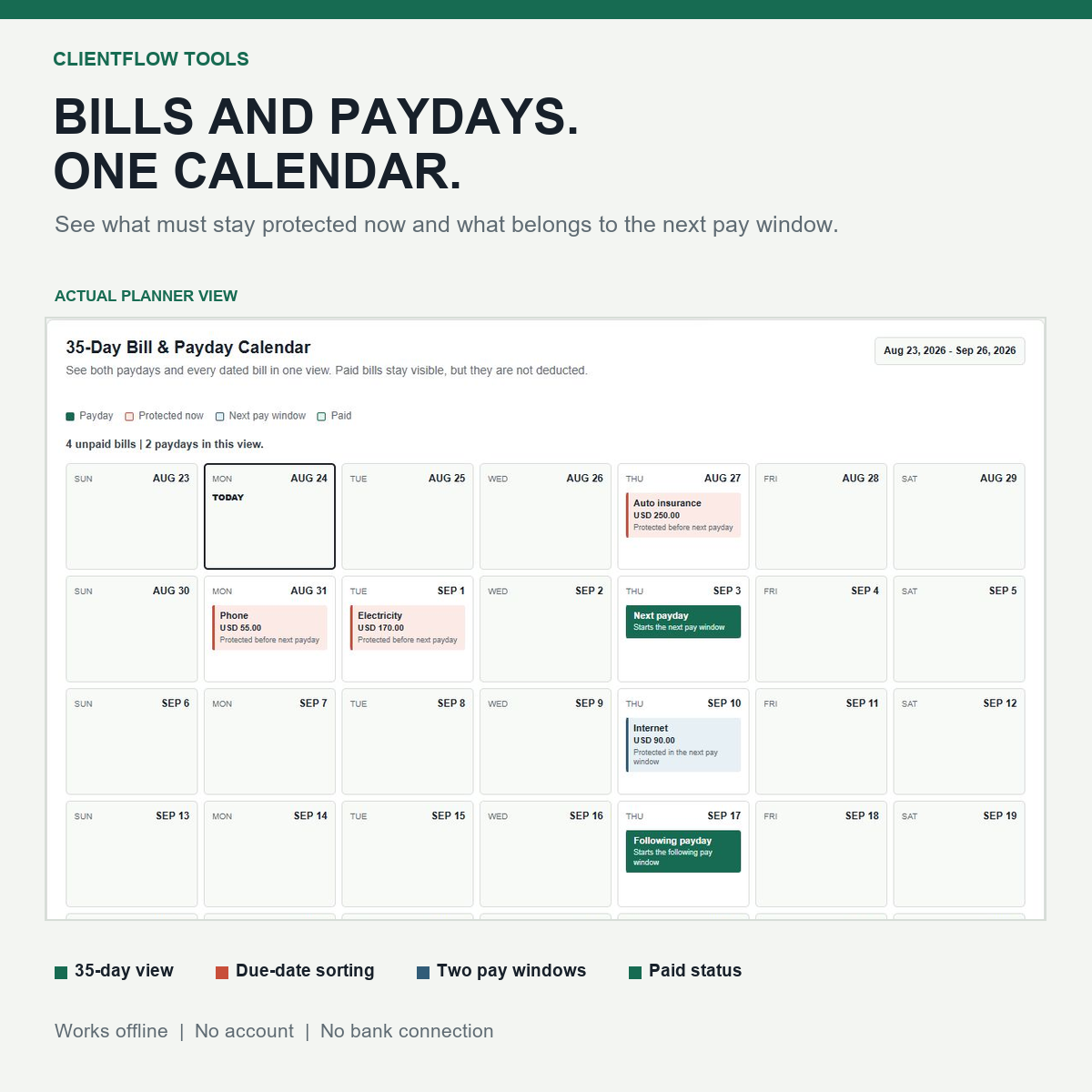
Keep the next 35 days in one view
The free sorter handles one current list and clears when the tab closes. The $7 offline planner puts both paydays and every dated bill on a calendar, then adds separate rent set-asides, essentials, a reserve, local saving, backup and restore, and a six-page printable PDF.
- Free here: up to six bills, two paycheck totals, no saving.
- Paid once: 35-day calendar, full two-window plan, local save, backup, and print.
- Still private: no bank login and no subscription.
Use WELCOME10 for 10% off.
Bills by paycheck questions
Which paycheck should pay a bill?
Use the last paycheck that arrives before the bill is due. That keeps the money in the account before the payment must leave it.
What if a bill is due on payday?
Use the earlier paycheck unless you have confirmed the deposit posts before the bill draft. The calculator flags this timing risk.
Is “left” the same as safe to spend?
No. It only subtracts the bills entered here. Use the free safe-to-spend calculator to also subtract essentials and a reserve.
Why enter a third payday when I am planning two checks?
The third date closes Paycheck 2's window. Without it, a bill after Paycheck 2 cannot be assigned reliably.
What if my bills are too heavy in one paycheck?
Review due-date changes with the biller, split a cost only when the biller permits it, or begin setting aside part of the amount earlier. Confirm all terms directly with the provider.
Does this work for semi-monthly pay?
Yes. Enter the actual three deposit dates. The calculator does not assume a 14-day interval.